Curved corners and organic lines are the trend in the world of architecture. They give a building a softer, almost natural appearance and break away from the harsh, straight lines we have seen for years. But building a curved facade with a rectangular product like brick? That requires a well-thought-out approach.
Whether you are opting for a subtle rounding or a complete circle: these are the ways to achieve it.
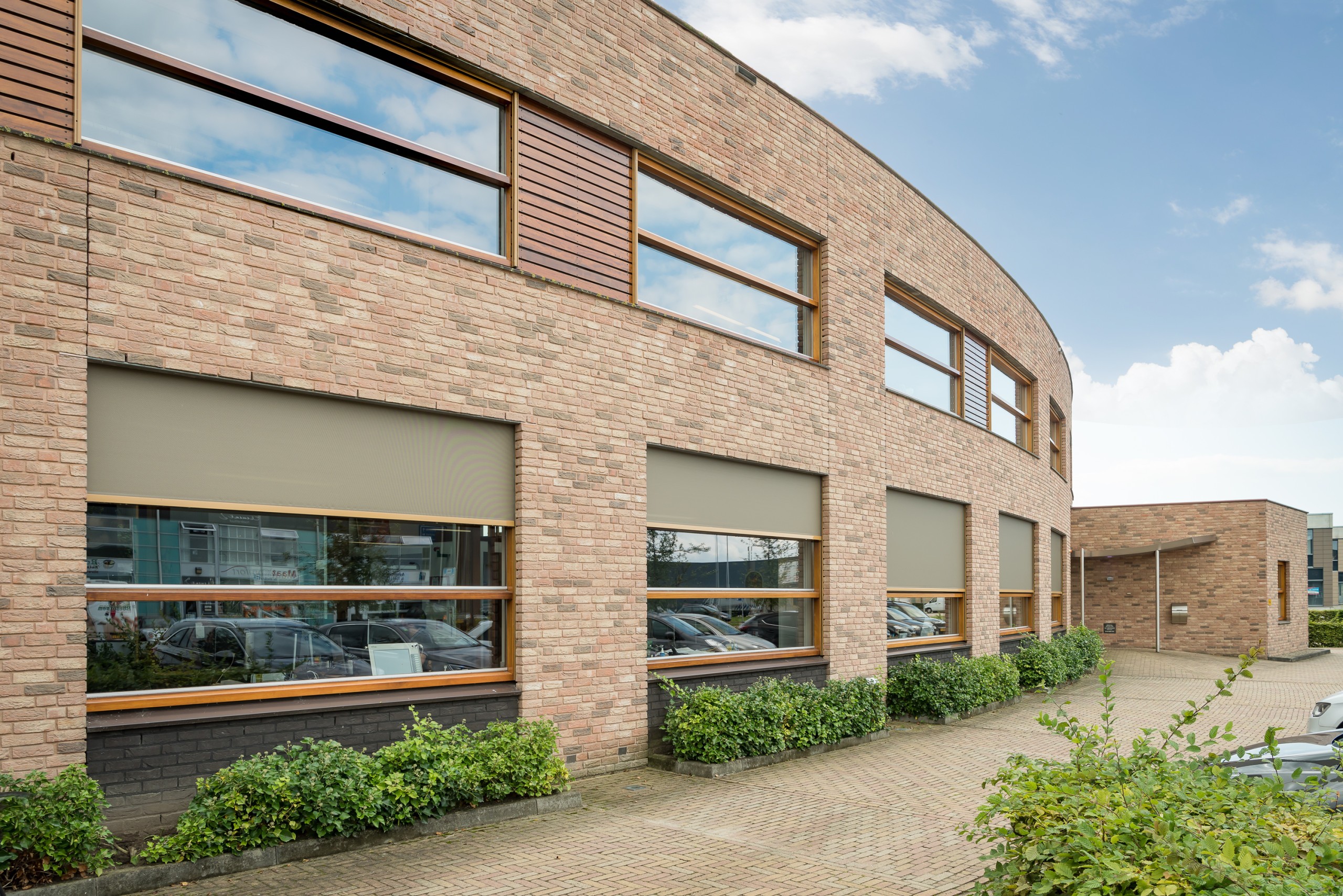
The 'elbow': the bold, rhythmic look
The most accessible way is working with standard straight bricks (stretchers). By slightly rotating each brick, the curve is created.
- The look: You clearly see the segments of the bricks. This gives an honest, almost 'stepped' character to the facade.
- Technical: The perpends (vertical joints) on the outside become wider than on the inside. This works perfectly for gentle curves (radius > 2 metres). For sharp curves, the joints on the outside become too large, which is aesthetically less pleasing.
- Style tip: Combine this with a random bond. Since joints in a curve never seem to align perfectly, a random bond hides these irregularities and creates a calmer image.
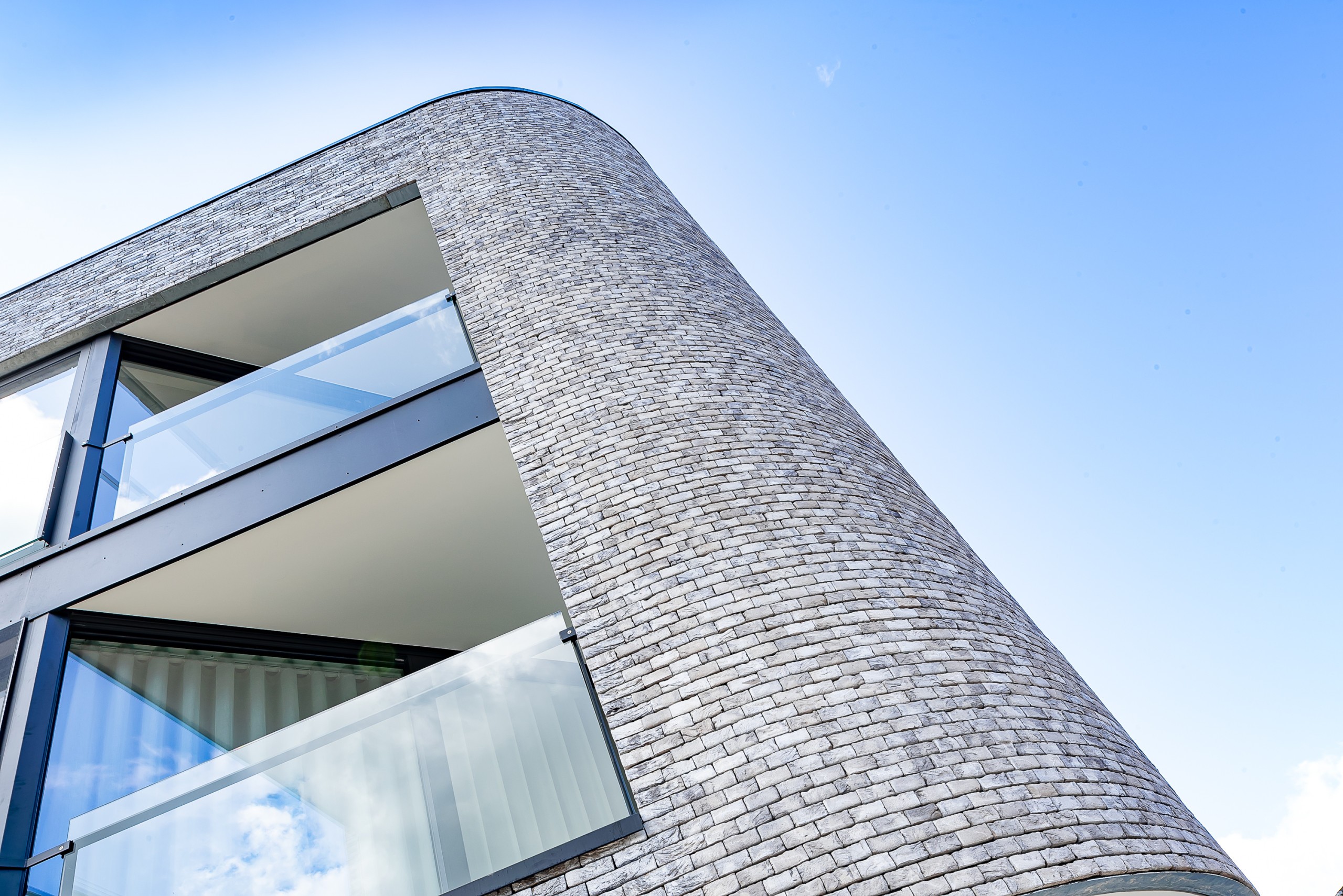
Header bond: traditional and refined
By laying the bricks so the short side (the header) is visible, you create many more 'pivot points' per metre.
- The look: The facade gains a rich, vertical rhythm. It looks more artisanal, and the curve flows much more smoothly than with stretchers.
- Technical: Because the brick is narrower, the difference in joint width remains limited. Note: for tight curves, half-bricks are used. By sawing bricks in half, you prevent the back ends from colliding in the inner curve, allowing you to achieve the desired radius.
- Style tip: This bond is beautiful for accents, such as a rounded bay window or a stairwell, to set them apart from the rest of the masonry.
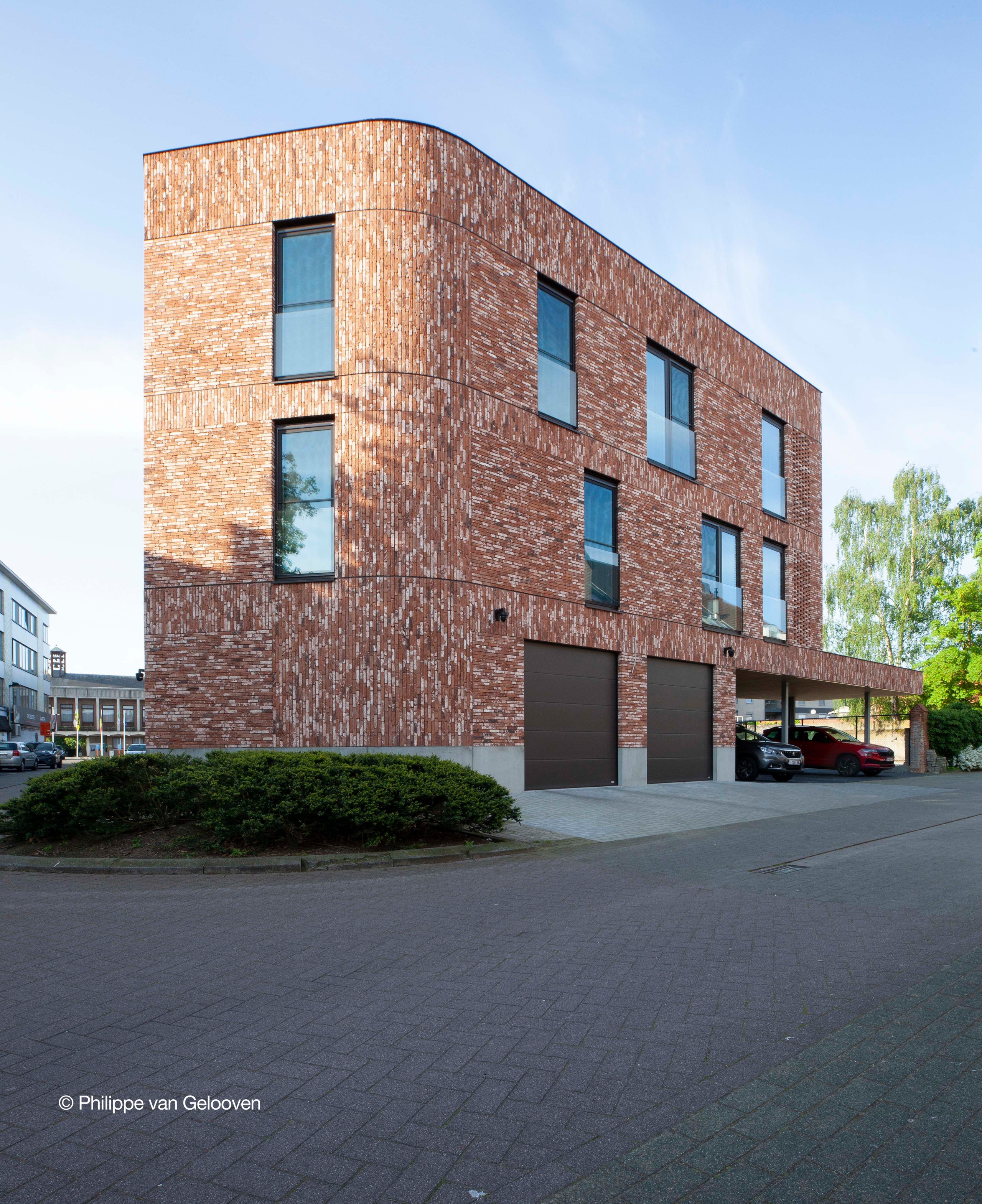
Soldier courses: the modern design hack
Vertical masonry is currently incredibly popular. Here, you place the bricks upright on their short ends.
- The look: An ultra-smooth curve. Since a brick is usually only 50 or 65 mm thick, this bond follows a curve almost effortlessly. It emphasises the height of a building and creates a modern, texture-like effect.
- Technical: Often applied in 'bands' or specific facade sections. Pay attention to the anchoring; vertical masonry requires a precise distribution of wall ties.
- Style tip: Use this for deep shadow effects. The numerous vertical joints create a beautiful interplay of light and dark on the curve.

Special shaped bricks: the perfect radius
For those who want no compromises, there are special shaped bricks. These bricks are produced in the factory with a rounded header or a specific angle.
- The look: Perfection. The joint width is exactly the same everywhere, making the facade look as if it were cast.
- Technical: The most expensive solution and requires careful planning (lead time), but structurally the most stable option for very sharp corners.
- Want to know more? Check our FAQ on special shaped bricks for all technical details.
Quick overview: which method do you choose?
| Method | Best for... | Joint width | Difficulty level |
|---|---|---|---|
| Stretchers (Elbow) | Gentle curves | Variable | Medium |
| Header bond | Medium curves | Constant | High (labour-intensive) |
| Soldier course | Design accents | Very constant | High |
| Special shapes | Sharp, sleek corners | Perfectly even | Low (in execution) |
The invisible foundation: the back wall and insulation
A curved facade is only as good as the construction behind it.
- Back wall: Often, a curved concrete wall (cast-in-place) or calcium silicate blocks are chosen.
- Insulation: Use flexible mineral wool. Rigid insulation boards do not bend and leave gaps in the curve. Mineral wool follows the shape of the cavity seamlessly, preventing thermal bridges.
- Anchoring: Do not forget that a curved wall needs extra wall ties (often 8 to 10 per m2) for stability, especially at the points where the curve begins and ends.
Conclusion
A curved facade gives your project character. Whether you choose the ruggedness of the elbow method or the sleekness of a special shape: the brick once again proves its enormous versatility.


