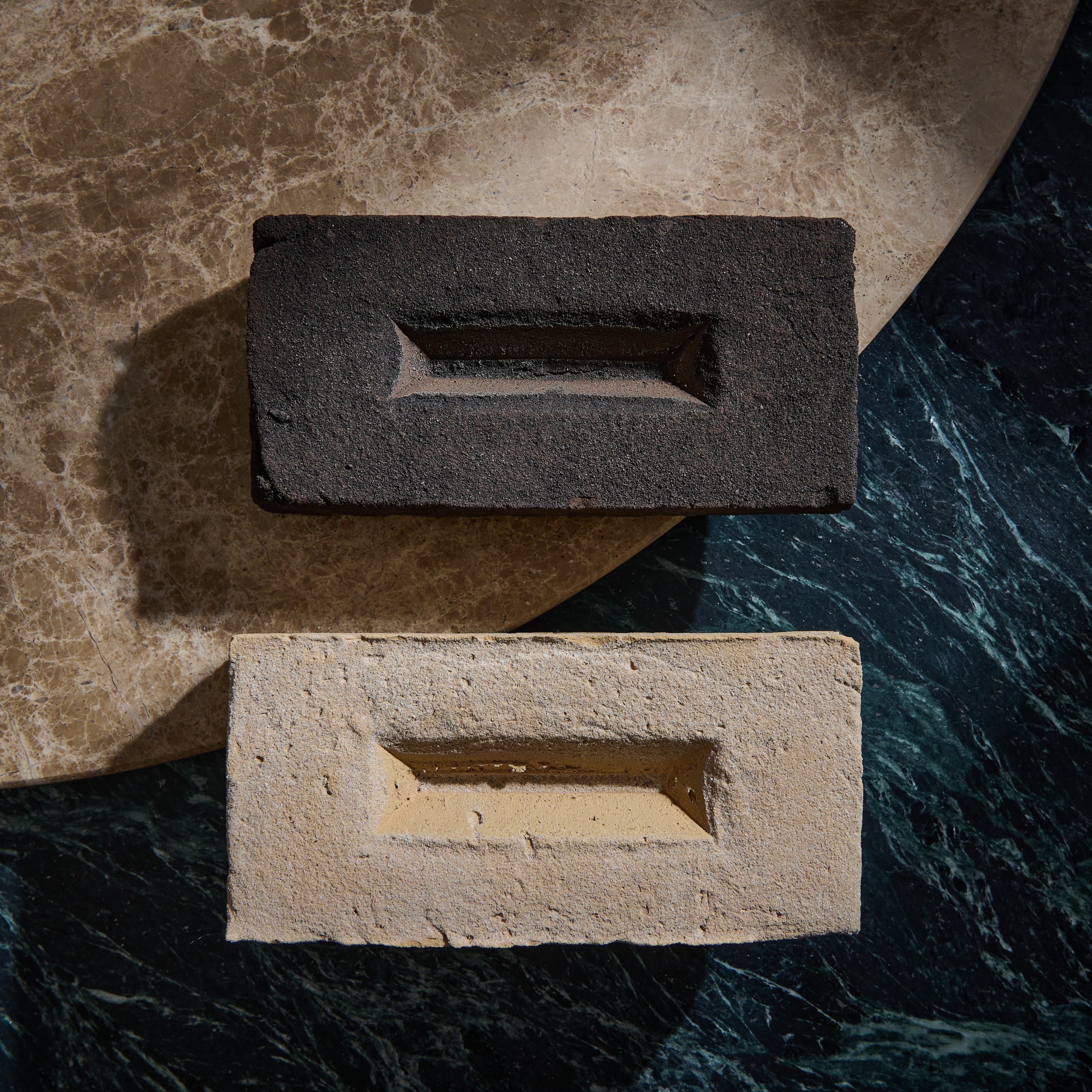
A frog is the rectangular indentation you see in the flat surface of most hand-moulded facing bricks.
Why is that hole there? It is not an aesthetic choice, but a technical aid:
- Better adhesion: The mortar locks into the hollow ('keying'), anchoring the brick firmly into the masonry.
- Historical drying function: In the past, the frog was essential to the production process. When bricks were still dried in the open air, the indentation provided a larger surface area and a thinner core, allowing the brick to dry faster and more evenly.
- Modern production: In our current, automated drying kilns, this drying effect is virtually negligible. However, the frog is retained because of its advantages during bricklaying and to reduce the weight of the brick, which improves ergonomics for the contractor.
Should the frog face up or down? The golden rule in facade masonry is: Frog up. This has everything to do with the aesthetics of a hand-moulded brick:
- The brick's 'smile': During production, the ball of clay is thrown with force into the sanded mould. This creates a typical, erratic grain or crease on the visible side of the brick.
- The result: If you lay the brick with the frog facing up, this grain runs in a natural, smiling curve. If you lay the brick upside down, the brick 'cries' (the grain curves downwards). For the best shadow play and the right look, it is best to let the brick smile.
Do all bricks have a frog? No, there are two important exceptions:
- The N70 series: Our slimmer N70 brick (±7 cm deep) is solid and has no frog. Because this brick is thinner than a standard Waal format, an indentation would make the brick too fragile. It is already light enough by itself.
- The 'solid' bricks (1 in 8): In a standard pallet of hand-moulded bricks, we produce about 12% of the bricks without a frog (flat).
Why? You use these for detailed work where the top or bottom of the brick remains visible, such as in claustra masonry, soldier courses above a window, window sills, or garden walls. This way, you never look into an indentation.
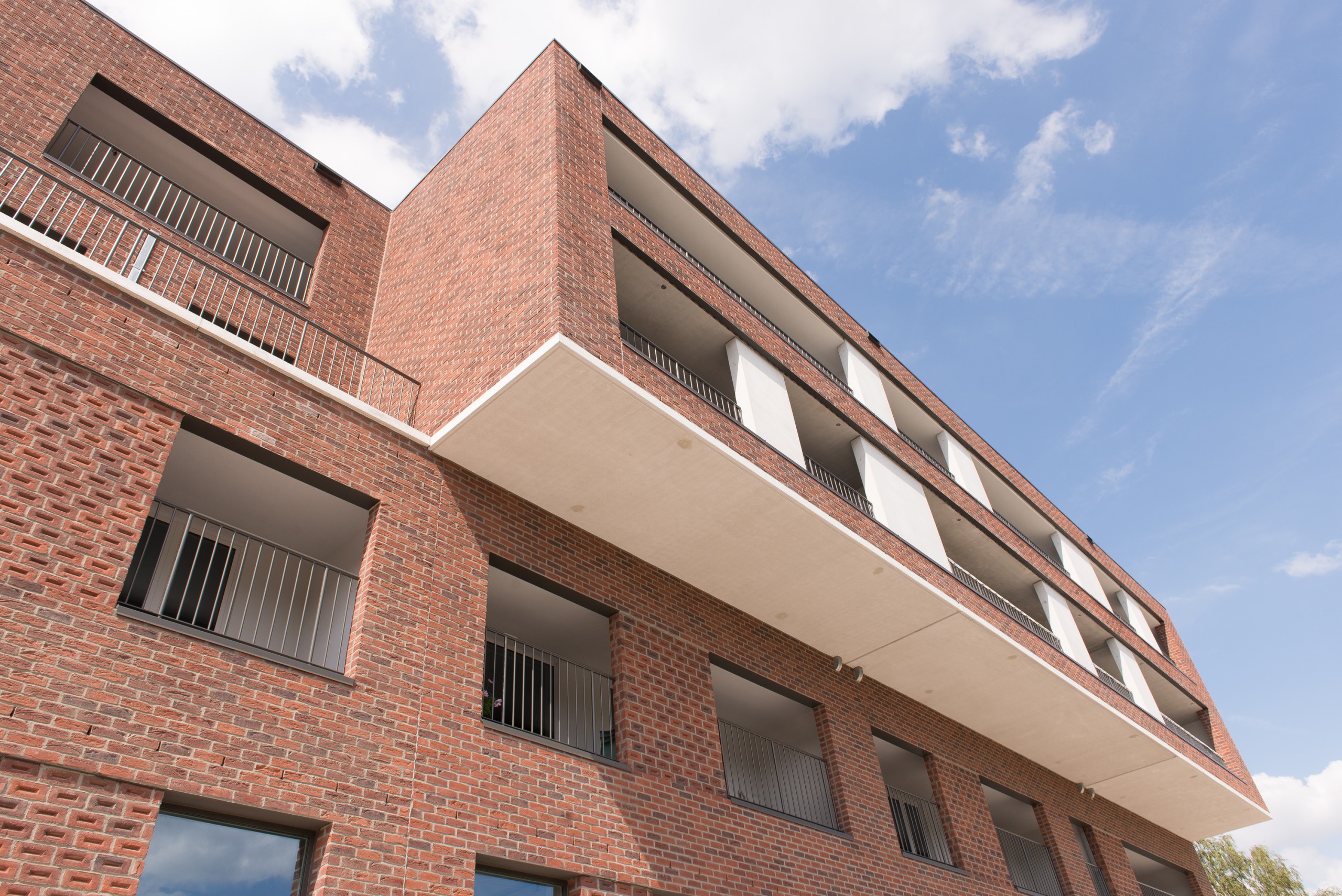
Creative tip: Sometimes architects consciously choose to process the frog visibly in the facade ('on its side'). This gives a very specific, graphic texture to the building.
Did you know? The shape of the frog is often unique to each brick manufacturer. In a way, it serves as the manufacturer's signature within the brick.