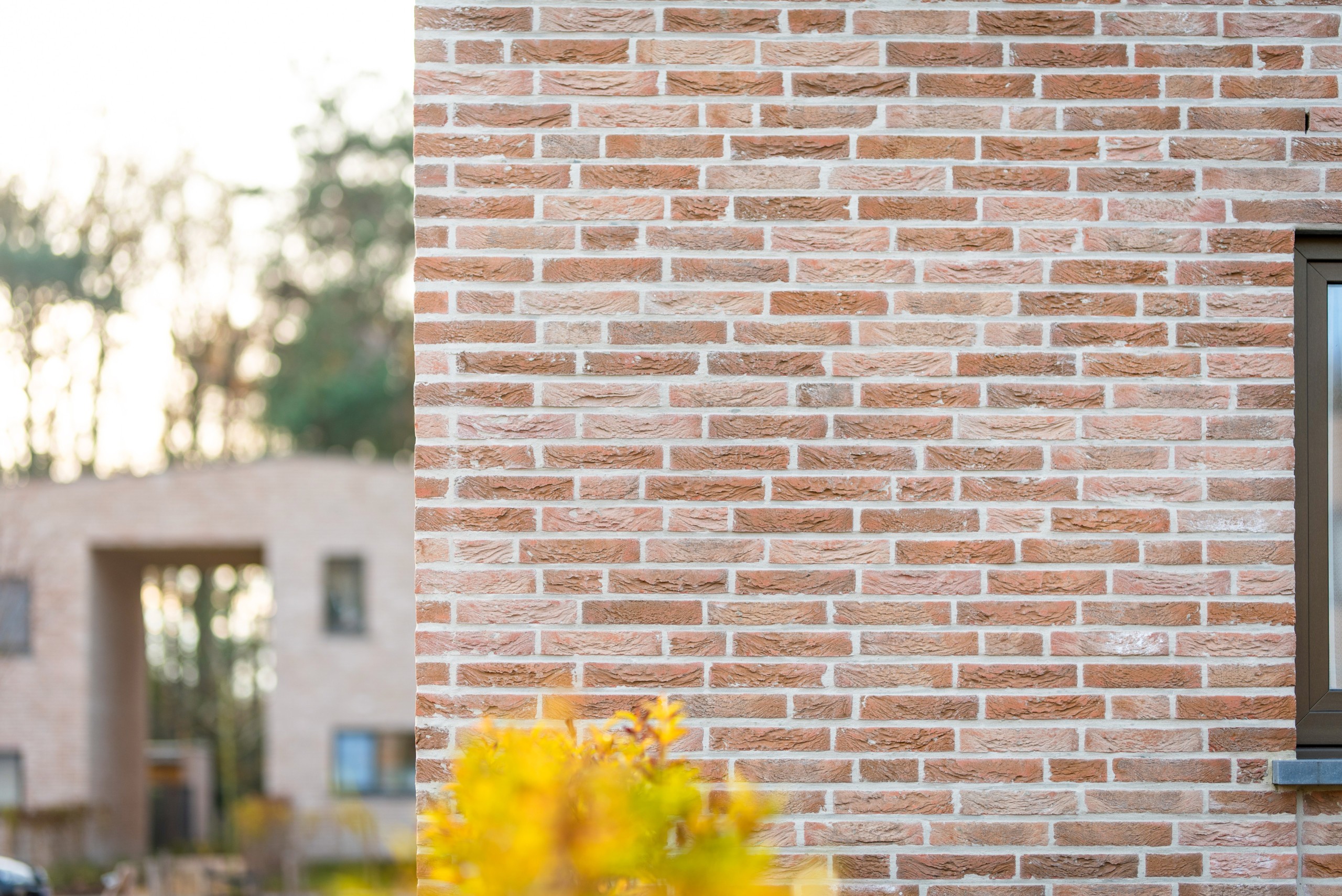
With its long, slender shape (240 x 70 mm), the N70 has different dimensions compared to a standard brick. This means that while every brickwork bond is technically perfectly possible, the sizing requires a specific approach.
The maths at the corners
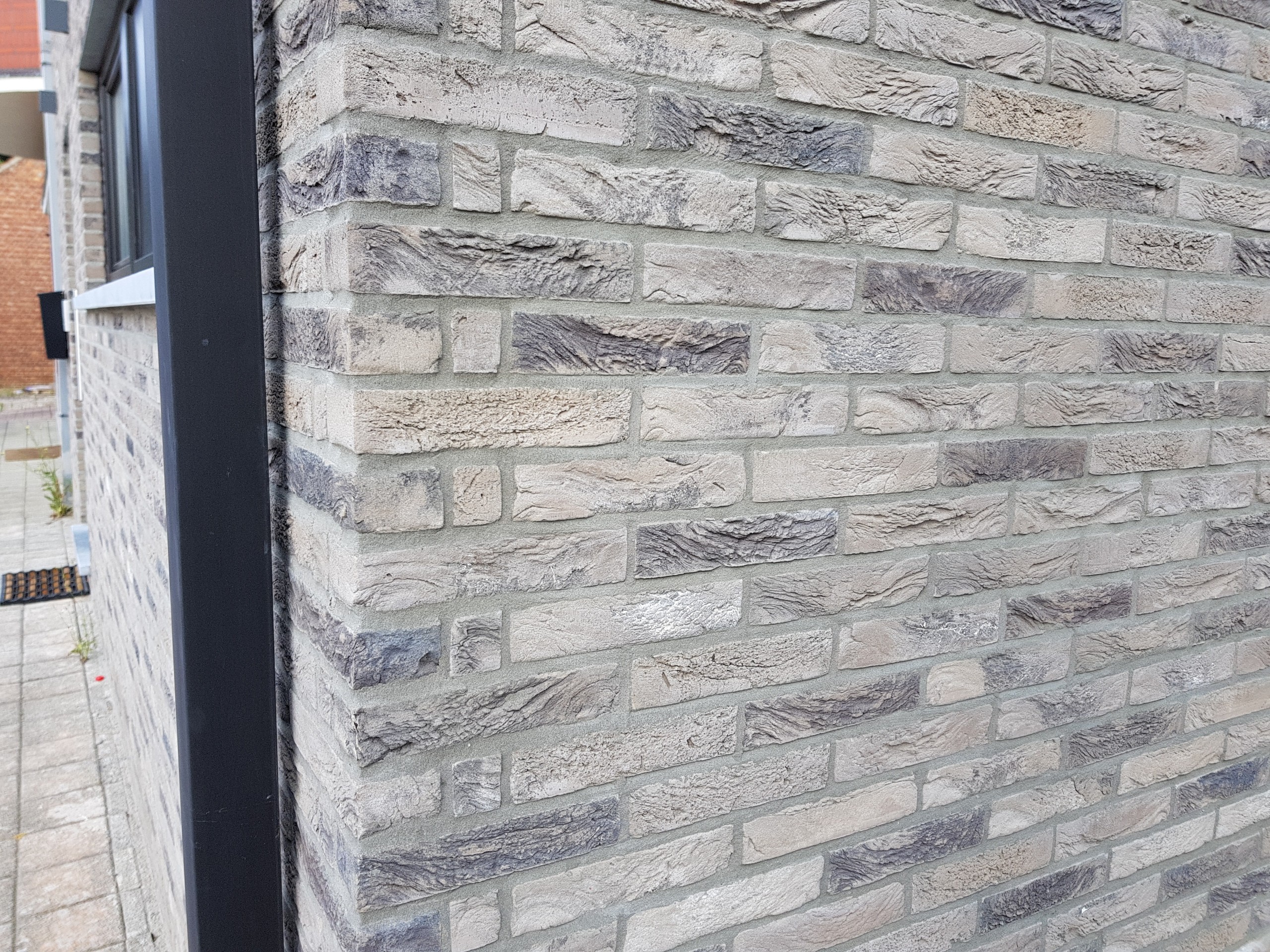
With a standard brick, the length is exactly twice the width plus one joint. For the N70, this ratio is different. If you turn an N70 brick at the corner, the header (70 mm + joint) falls slightly short relative to the underlying course. To maintain a crisp pattern, the bricklayer therefore works with cut pieces.
Stretcher and quarter-brick bonds: aesthetic choices
Choosing a stretcher bond or a quarter-brick bond? Then these cut pieces are unavoidable. The contractor can solve this visually in various ways. Technically, both methods are perfectly sound; it is purely a matter of taste:
- The clean corner: Here, the bricklayer places slightly longer cut pieces (e.g., a three-quarter bat) close to the corner. The truly small cut pieces required to make the bond work are processed further along in the main facade area. This is much less noticeable in the grand scheme of things and keeps the corners of the property looking sharp.
- Cut pieces in the corner: Here, short cut pieces are placed directly at the corner. This is a widely used method, but it does create a visually striking accumulation of small brick pieces on the corner line.
- Our advice: Discuss your visual preference with the contractor beforehand, so expectations on site are perfectly aligned.
-
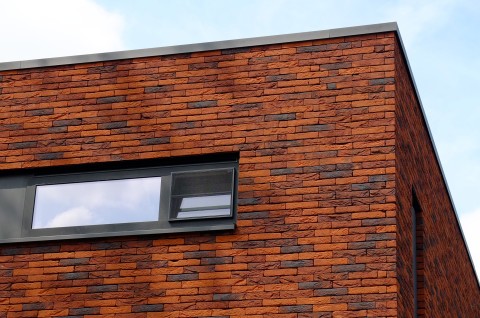
The clean corner -
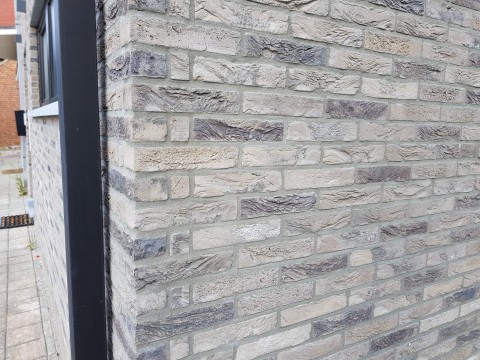
Cut pieces in the corner -
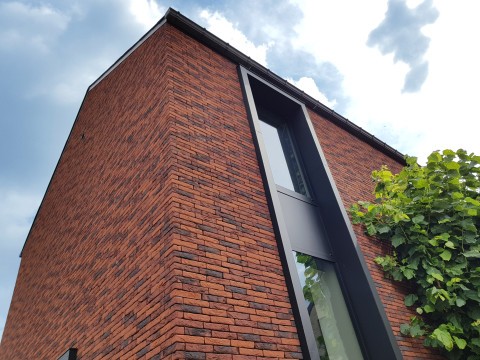
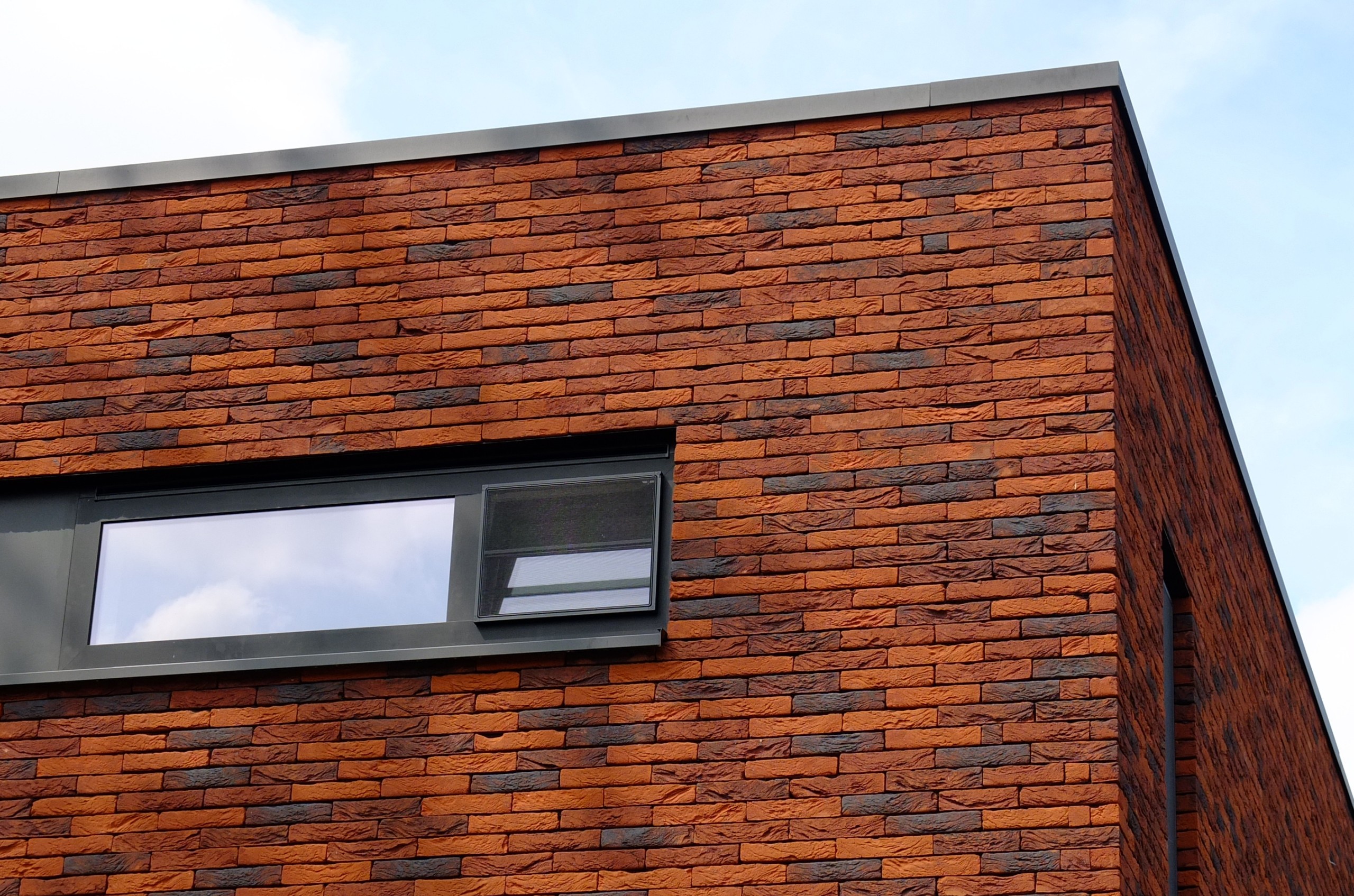
Quarter-brick bond

English cross bond and Flemish bond
These classic patterns are certainly possible, but the N70 format requires a relatively large amount of extra sawing to create so-called 'false headers' (snap headers). When making this choice, factor in a slightly longer processing time and a higher cost price per square metre.
The most efficient choice: soft random bond
In practice, this is the absolute favourite for the N70. Because the perpend joints (vertical joints) in a random bond do not have to align on a fixed vertical line, the bricklayer can immediately reuse the offcut from a corner or window as the starting brick for the next course. This works incredibly smoothly, results in virtually zero cutting waste, and perfectly accentuates the sleek, horizontal lines of the brick.