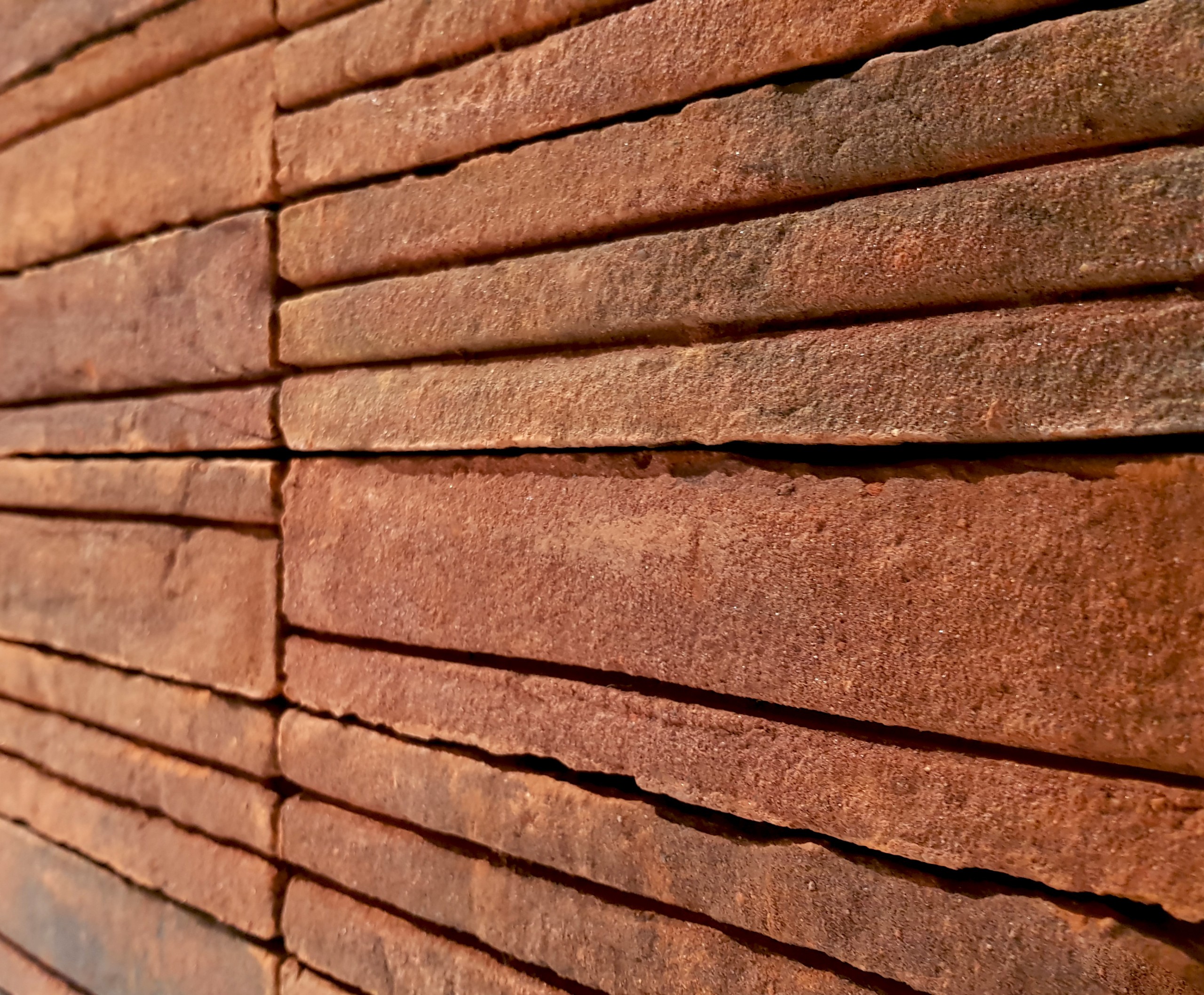
The DUBIO brick is the result of a collaboration between the product design agency "Depot Roel Vandebeek" from Maasmechelen and Nelissen Bricks from Kesselt-Lanaken. Shadow lines in the brick give the impression that the facade is constructed with remarkably thin bricks. “Facades built with glued bricks are hugely popular with architects,” says the manufacturer. “The demand for unique linear designs continues to rise.” Nelissen addresses this demand sustainably with the DUBIO brick, while staying within existing production capabilities. “The DUBIO focuses not only on the brick itself but also on the broader context of the facade. Think of it as akin to a tiled floor with endless pattern possibilities.”
Making the Impossible Possible
This innovative concept offers countless possibilities. The brick can be installed in various colors, both vertically and horizontally, and irregular patterns are also an option. The construction sector can achieve creations with DUBIO that would be impossible with a standard brick. “You get one brick, but you see two thin bricks stacked on top of each other. So thin that it would be impossible to produce them in hand-molded form: they would warp during the firing process. Moreover, they’d be too expensive to lay because you’d need a much larger quantity,” explains the manufacturer.
Sustainable Performance
The N70 brick from Nelissen serves as the base for the DUBIO. It is three centimeters less deep than a standard brick, which provides more room for insulation in the exterior wall or more living space. When using the DUBIO in a construction project, the total weight of the required bricks is 30% less, resulting in a 30% reduction in transport costs. Thus, Nelissen enables architects to combine aesthetics and sustainability. Since the brick is the same height as a standard brick, the yield on-site remains the same, but visually, it appears that twice as many bricks have been used.
A Great Honor
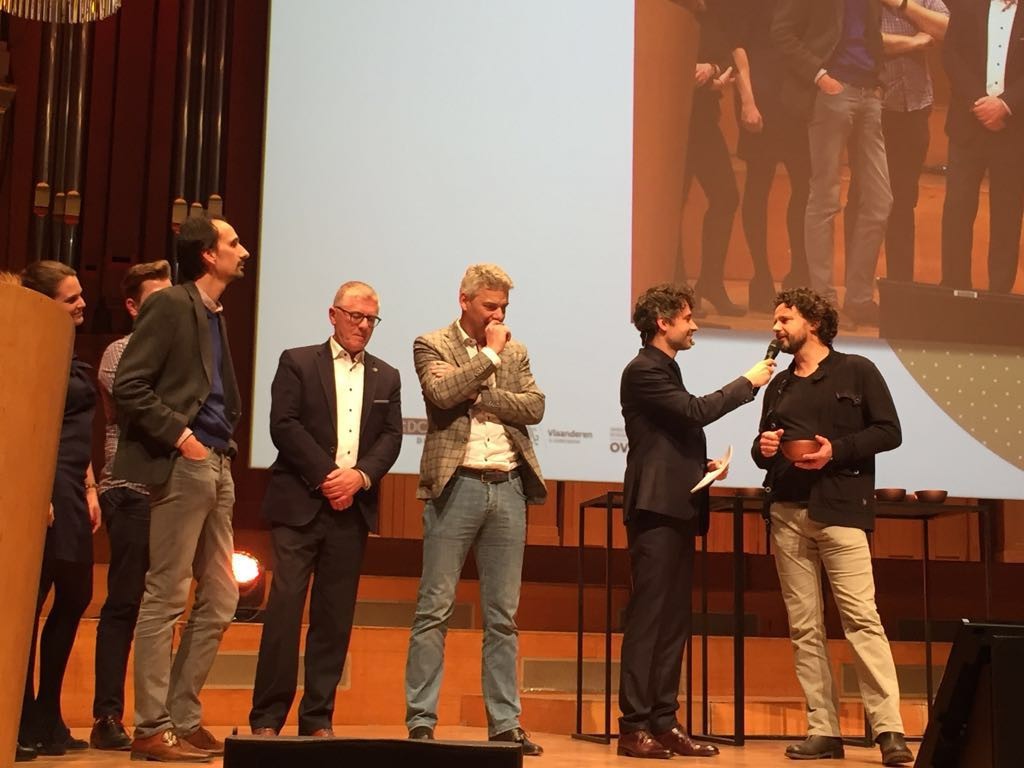
A product, project, or service does not win a Henry van de Velde Award by chance. Last year, Flanders DC launched a call to designers, companies, governments, and organizations. The condition: it had to be a design project with a Flemish link and released after April 2016. More than 180 participants took the chance and submitted their creations.
The Henry van de Velde Awards celebrate Flemish designers, companies, products, projects, and services that, through design, have a positive impact on the economy and society. An international professional jury evaluates all nominations.
"An aesthetic and cost-reducing idea that benefits both masons and architects," said the jury.


