From ball of clay to high-quality facing brick
Extraction
Our production process starts with the careful extraction of 100% natural raw materials. We extract much of these raw materials from soil sourced from construction and infrastructure projects, giving value to what would otherwise end up as waste. We also use the natural product Löss from our neighbouring countries, and sometimes even from our own quarry in Kesselt.

Clay preparation
The raw clay is stored outdoors and then deposited into box feeders using a loader. The clay is transported via conveyor belts to the edge mill, where it is crushed and mixed into a homogeneous mass by crushing rollers, coarse rollers and fine rollers. The mass is transported to the appropriate stock piles (yellow and red clay).

Press line
Depending on the type of brick being produced, the clay is loaded into the box feeders of the press line. This clay then enters the mixers where the right amount of water is added for optimal plasticity. The clay is then pressed through the pressure tub into balls and fed to the conveyor belts. A layer of sand has been applied to these conveyor belts. The sand is applied mechanically to cover the entire clay ball. The clay balls are then mechanically inserted into the mould (inserters). The excess clay is cut off and the bricks are removed from the mould and collected on a drying plate. The bricks remain raw at this point.

Drying chambers
The raw bricks are loaded onto the loading rack (drying rack). Tracks guide these racks onto the transverse carriage, which takes them back to the drying chambers. The bricks are now dried to make them easier to transport. Recovery heat from the kilns is used in these drying chambers. The drying process takes about two days.

Brick transport
The dried bricks are then transported to the sorting zone. Where the bricks undergo an intensive visual inspection and sorting process. Next, they are transported to the setting machine. Via the grouping belt, they are then placed in a certain pattern and stacked on the kiln carts using the transfer gripper. The setting pattern ensures that the bricks remain stable on the kiln carts during the firing process (and on the pallet afterwards).

Kilns
The kiln carts are guided in and out of the tunnel kilns via the transverse carriage. Because the bricks come stacked in a certain pattern, all the bricks are exposed to the same kiln atmosphere. This allows the same airflow to pass through all the bricks in the kiln. The process of heating and cooling in the kiln is a process that needs to be gradual to prevent the formation of permanent cracks. The firing process entails three phases: heating, firing and cooling. The entire process takes around three days. It is what gives the brick its colour, which depends on the clay, the sanding and the additives as well as the firing temperature. The firing process is closely monitored and adjusted in the operator room.
The flue-gas cleaner removes fluoride from the flue gases. Which is then disposed of to other industries where it is used as a secondary raw material. After firing, the kiln carts are guided by transverse cart to the buffer tracks or the staging track for packaging. These buffer tracks are needed because the kilns are fully automated and operate 24/7 to stock the carts coming out of the kiln at night and on weekends.

Packing machine
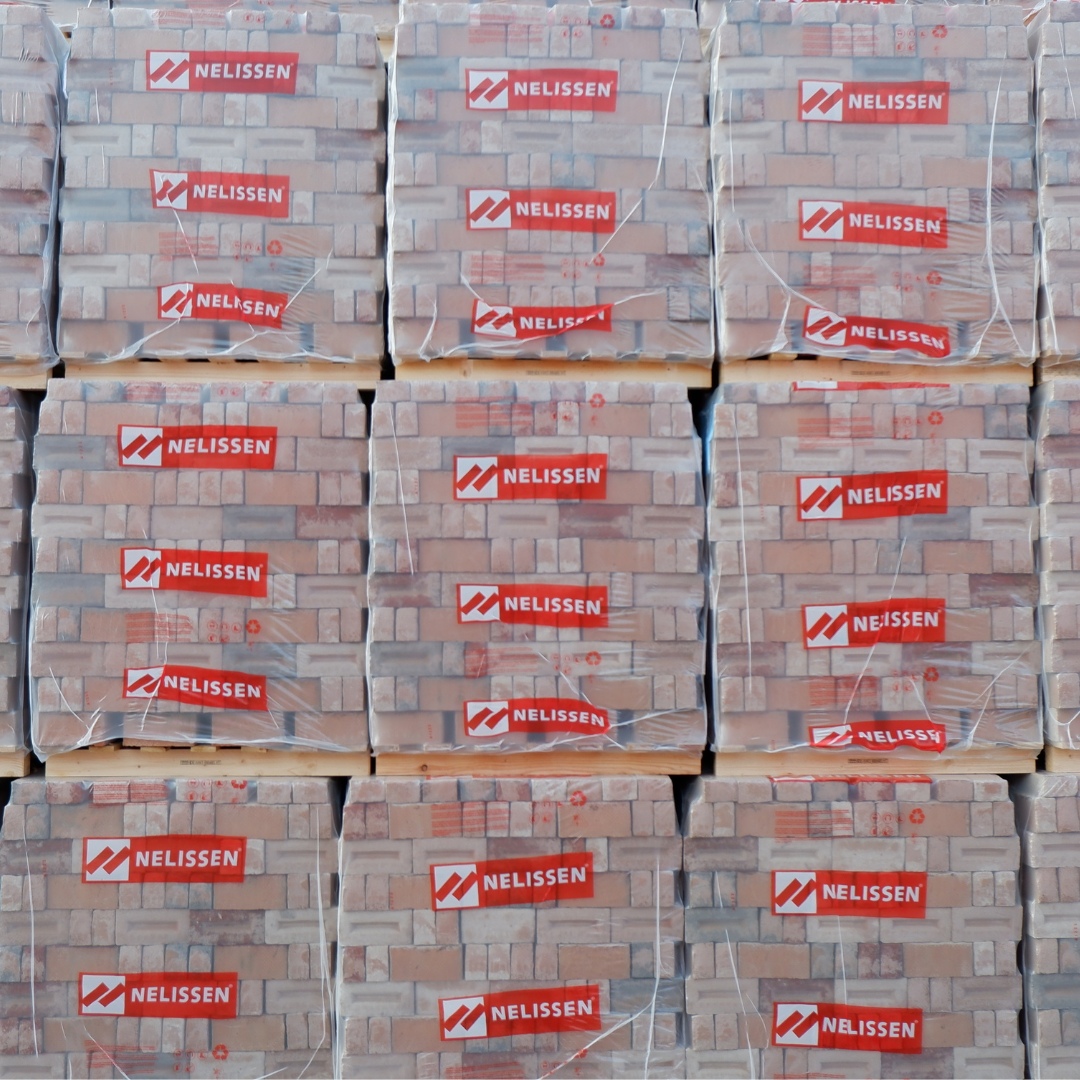
Once the kiln carts are on the staging track, the brick gripper takes the appropriate pallet quantity from the kiln carts to pack. The film dispenser and shrink installation ensures that each pallet is packed according to any specification. This machine measures the height of each pallet and then provides the right amount of film. This helps to avoid unnecessary environmental impact. The packed pallets are then led to a buffer where they can either wait for or be picked up by the forklift drivers right away.

Storage
The storage has a capacity of 30 million bricks. Five forklift drivers load the trucks quickly and efficiently 12 hours every day.